“Macros” come up often in fitness and nutrition conversations, sometimes with complicated ratios and tracking apps attached. Understanding the basics can make food choices easier, without any of that complexity.
This guide answers what are macronutrients, what each one does, where to find them and how to include all three in everyday meals. It’s general information; your needs depend on age, activity, health and more, so a doctor or registered dietitian can advise you personally.
What Are Macronutrients?
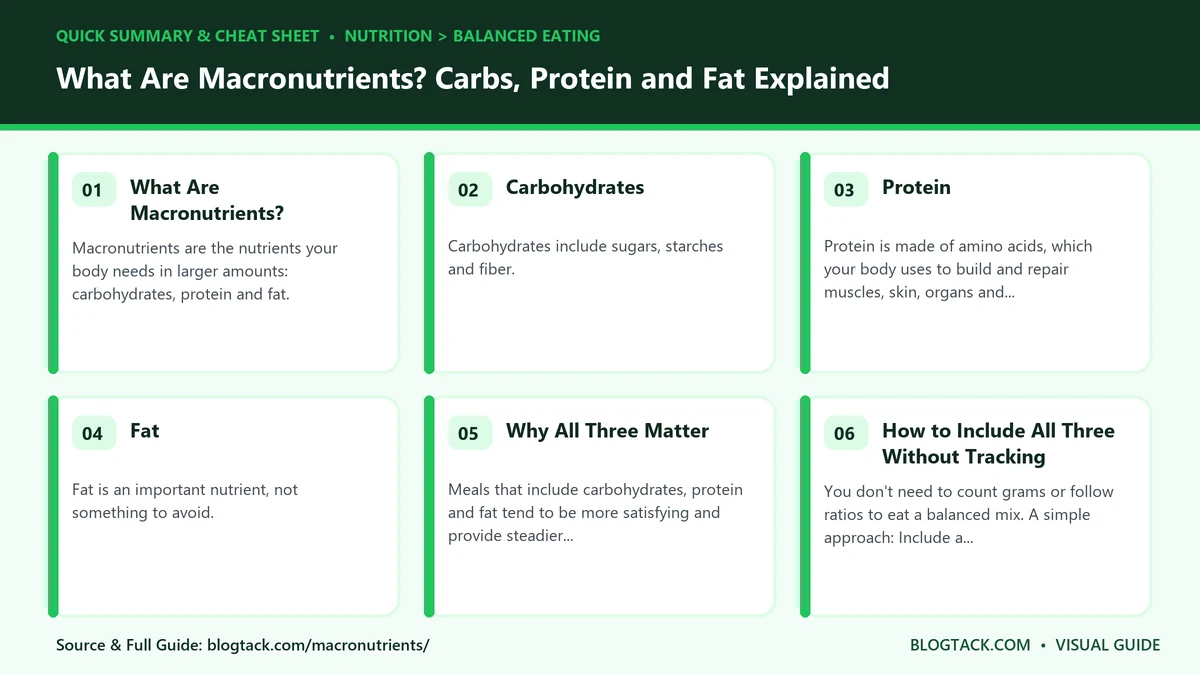
Macronutrients are the nutrients your body needs in larger amounts: carbohydrates, protein and fat. They provide energy and the building blocks for many functions. Micronutrients, by contrast, are vitamins and minerals needed in smaller amounts.
| Macronutrient | Main roles | Common sources |
|---|---|---|
| Carbohydrates | Main energy source, especially for the brain and active muscles | Grains, fruits, vegetables, beans, dairy |
| Protein | Building and repairing tissues, enzymes, hormones | Meat, fish, eggs, dairy, beans, lentils, tofu, nuts |
| Fat | Energy, cell structure, absorbing some vitamins | Oils, nuts, seeds, avocado, fish, dairy, meat |
All three matter. Most foods contain a mix.
Carbohydrates
Carbohydrates include sugars, starches and fiber.
Types of Carbohydrates
| Type | Examples | Notes |
|---|---|---|
| Whole grains and starchy foods | Oats, brown rice, whole wheat bread, potatoes with skin | Provide energy and fiber |
| Fruits and vegetables | Apples, berries, carrots, leafy greens | Bring fiber, vitamins and water |
| Legumes | Beans, lentils, chickpeas | Carbs plus protein and fiber |
| Refined grains | White bread, many pastries | Less fiber; fine as part of variety |
| Added sugars | Soft drinks, sweets, some cereals | Guidelines recommend limiting |
The 2025–2030 Dietary Guidelines recommend limiting added sugars and refined, highly processed carbohydrates, while including fruits, vegetables and whole grains (AJMC).
Fiber
Fiber is a type of carbohydrate your body doesn’t fully digest. It supports digestion and helps meals feel satisfying. See why fiber is important.
Protein
Protein is made of amino acids, which your body uses to build and repair muscles, skin, organs and more—especially important if you’re doing strength training at home and managing muscle soreness.
Protein Sources
| Animal sources | Plant sources |
|---|---|
| Eggs | Beans and lentils |
| Fish and seafood | Tofu and tempeh |
| Poultry | Nuts and seeds |
| Meat | Whole grains (smaller amounts) |
| Dairy (milk, yogurt, cheese) | Soy milk and some fortified plant milks |
The new Dietary Guidelines put particular emphasis on including protein foods at every meal. Varying protein sources, including plant-based ones, adds different nutrients. If you eat mostly plant foods, see plant-based eating for beginners.
Fat
Fat is an important nutrient, not something to avoid. It helps your body absorb vitamins A, D, E and K, supports cell health and adds flavor and satisfaction to meals.
Types of Fat
| Type | Common sources | General guidance |
|---|---|---|
| Unsaturated fats | Olive oil, nuts, seeds, avocado, oily fish | Often recommended as main fats |
| Saturated fats | Butter, cheese, fatty meat, coconut oil | Guidance varies; many experts suggest moderation |
| Trans fats (artificial) | Some older processed foods | Largely removed from the U.S. food supply |
Advice on saturated fat has been debated, and the new Dietary Guidelines changed some earlier messaging. For personal guidance, especially with heart health concerns, talk to your doctor.
Why All Three Matter
Meals that include carbohydrates, protein and fat tend to be more satisfying and provide steadier energy than meals built around just one. For example:
| Meal with mostly one macronutrient | More balanced version |
|---|---|
| Plain toast | Toast with eggs and avocado |
| A bowl of plain pasta | Pasta with lentil or meat sauce and vegetables |
| Fruit on its own | Fruit with yogurt and nuts |
See how to build a balanced plate for a simple way to combine them.
How to Include All Three Without Tracking
You don’t need to count grams or follow ratios to eat a balanced mix. A simple approach:
- Include a protein food at most meals.
- Add a carbohydrate food, ideally including vegetables, fruits or whole grains.
- Include some fat for flavor and satisfaction.
- Vary your choices through the week.
For a broader view, see how to build a balanced diet.
A Note on Tracking
Some people use apps to track macronutrients, for example for sports or with medical guidance. For many others, detailed tracking isn’t necessary and can make eating feel stressful or rigid. If tracking leads to anxiety, guilt or obsessive thoughts about food, it’s a sign to step back and consider talking to a professional.
Macronutrients on Food Labels
The Nutrition Facts label lists total carbohydrate (including fiber and added sugars), protein and fat per serving. It can help you compare products. See how to read nutrition labels.
Common Myths
| Myth | Reality |
|---|---|
| “Carbs are bad.” | Carbs are a main energy source; whole food sources bring fiber and nutrients. |
| “Fat makes you unhealthy.” | Fat is essential; the type and overall pattern matter. |
| “More protein is always better.” | Needs vary; most people can meet them through regular meals. |
| “You need to count macros to eat well.” | Balanced meals work for most people without counting. |
More in common nutrition myths.
Individual Needs Vary
How much of each macronutrient you need depends on age, body size, activity, pregnancy, health conditions and goals. Athletes, older adults and people with certain medical conditions may have different needs. A registered dietitian can help you understand yours.
What About Micronutrients?
Macronutrients get most of the attention, but vitamins and minerals matter too. Iron, calcium, vitamin D, potassium and many others support everything from bones to blood. Eating a variety of colorful vegetables and fruits, whole grains, protein foods and dairy or fortified alternatives is the simplest way to cover a broad range. The Dietary Guidelines provide more detail on nutrient needs at different life stages (DietaryGuidelines.gov).
Macronutrients at Each Meal: Examples
| Meal | Carbohydrate | Protein | Fat |
|---|---|---|---|
| Breakfast | Oats, fruit | Yogurt or milk | Nuts or seeds |
| Lunch | Whole grain wrap, vegetables | Chicken, beans or hummus | Olive oil dressing, avocado |
| Dinner | Rice or potatoes, vegetables | Fish, tofu or lentils | Cooking oil, cheese |
| Snack | Apple or crackers | Cheese or peanut butter | Comes with the protein |
You don’t need to hit every box at every meal. This is a pattern, not a checklist.
Macronutrients and Energy Through the Day
Many people notice that meals with only fast-digesting carbohydrates, like a sugary pastry on its own, leave them hungry again soon. Adding protein, fat or fiber often makes a meal feel more satisfying and helps energy feel steadier. Notice how different combinations feel for you, since everyone responds a little differently.
Plant-Based Protein Tips
If you eat little or no meat, combining different plant proteins through the day, like beans with grains or hummus with whole wheat pita, helps provide a range of amino acids. Lentils, chickpeas, tofu, tempeh, edamame, nuts and seeds are all useful.
Macronutrients for Different Life Stages
Needs change through life. Growing children and teenagers need enough of all three for growth. Pregnant and breastfeeding people often need more of certain nutrients. Older adults may benefit from paying attention to protein to help maintain muscle. Very active people may need more energy overall. These are general patterns; a doctor or registered dietitian can give advice that fits your stage of life.
Reading Macronutrients on a Recipe
Many recipes and packaged foods list macronutrients per serving. This can be interesting information, but it isn’t required for balanced eating. A quick look at whether a dish includes a protein, some vegetables or fruit, a grain or starch and some fat tells you most of what you need to know. If a recipe seems light on one part, you can add a side: a salad, a piece of fruit, a slice of whole grain bread or a handful of nuts.
Frequently Asked Questions
Are some macronutrients more important than others?
All three play different roles. Balance across them matters more than focusing on one.
Do I need protein shakes?
Most people can meet their protein needs from regular food. Ask a professional if you’re unsure.
Is sugar a macronutrient?
Sugar is a type of carbohydrate. Natural sugars in fruit and milk come with other nutrients; added sugars are worth limiting.
Should I eat low-carb or low-fat?
Neither is necessary for most people. If you’re considering a specific eating pattern for health reasons, talk to a doctor or dietitian first.
Which foods contain all three macronutrients?
Many do. Milk, yogurt, nuts, beans and many mixed dishes provide some carbohydrate, protein and fat together.
Do children need different macronutrients than adults?
Children need the same three, in amounts suited to their growth and activity. A pediatrician can advise on specific needs.
Is it okay to eat more of one macronutrient on some days?
Yes. Balance happens across days and weeks, not in every single meal.
The Bottom Line
What are macronutrients? Carbohydrates, protein and fat, the three nutrients your body needs in larger amounts. Each has a role, and most meals feel better and more satisfying when they include all three. You don’t need to track or follow ratios: build varied meals from whole and minimally processed foods, and seek personal guidance if you have specific needs.
This article is for general informational and educational purposes only and is not medical, nutritional, or dietary advice. Individual nutritional needs vary. Consult a doctor or registered dietitian for personalized guidance, especially if you have any health conditions or specific dietary needs.