At 6 p.m., the question “What’s for dinner?” can feel exhausting. Without a plan, it’s easy to fall back on takeout or whatever is fastest. Meal planning answers that question in advance, once a week, so evenings feel calmer.
This guide explains how to meal plan for the week: deciding what to eat, fitting meals around your schedule and keeping the plan flexible. For the cooking and storage side, see how to meal prep for a busy work week.
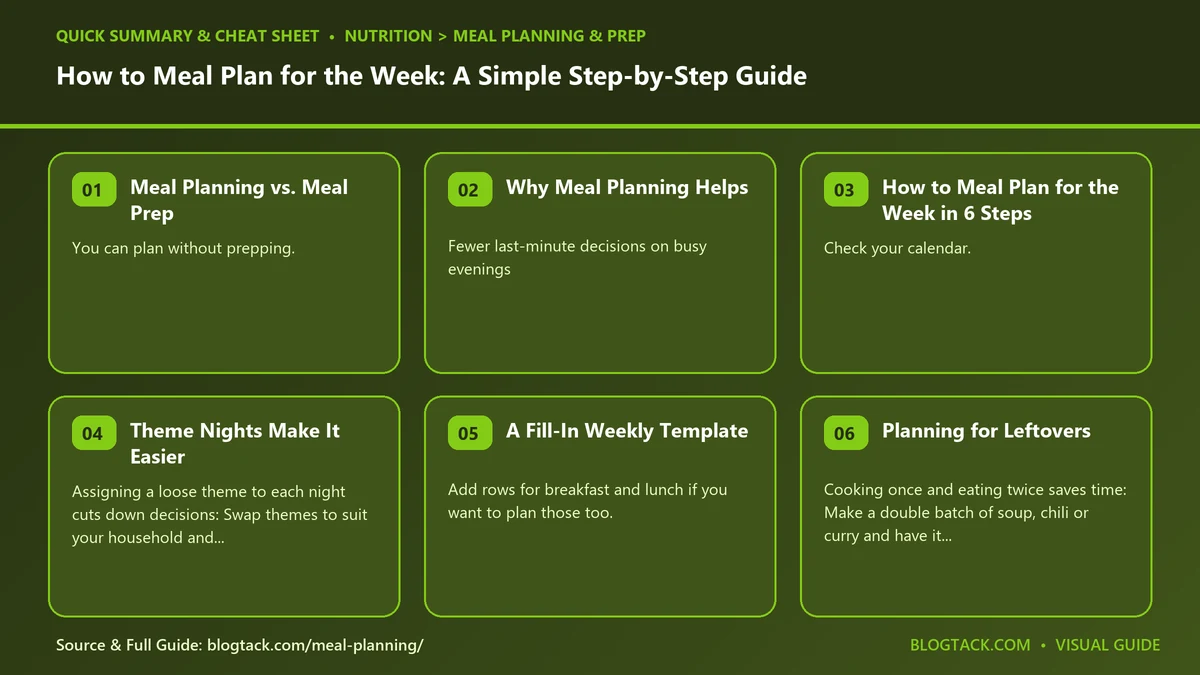
Meal Planning vs. Meal Prep
| Meal planning | Meal prep | |
|---|---|---|
| What it is | Deciding what you’ll eat and when | Cooking or preparing food ahead |
| When | Usually 15 to 30 minutes once a week | An hour or two, often on a weekend |
| Output | A list of meals and a shopping list | Cooked or chopped food in the fridge |
| Need both? | Planning helps on its own | Prep works best with a plan |
You can plan without prepping. Many people start with planning and add prep later.
Why Meal Planning Helps
- Fewer last-minute decisions on busy evenings
- Less food waste, because you buy what you’ll use
- Easier to include a variety of foods
- Often lower food costs. See healthy eating on a budget.
- Calmer weeknights
How to Meal Plan for the Week in 6 Steps
Step 1: Look at Your Week
Check your calendar. Which nights are busy? Who’s home for dinner? Any events or meals out? A plan that fits your real week is more likely to work—and reduces daily decision fatigue as part of a practical self-care routine.
Step 2: Decide How Many Meals to Plan
You don’t need to plan every meal. Many people plan just dinners, and keep breakfast and lunch simple or repeat them. A good start is four or five dinners, leaving room for leftovers or a night out.
Step 3: Choose Meals
Pick a mix of:
- Quick meals for busy nights (15 to 20 minutes)
- One or two meals that make leftovers for lunches or another dinner
- Family favorites you know work
- One new recipe if you want variety
Build each meal around a protein, a vegetable and a grain or other starch. See building a balanced plate.
Step 4: Check What You Already Have
Look in the fridge, freezer and pantry. Plan meals that use up foods that need eating first.
Step 5: Write a Shopping List
List every ingredient you’ll need, grouped by store section. See how to build a healthy grocery list.
Step 6: Keep the Plan Visible
Put it on the fridge, a whiteboard or a shared phone note so everyone knows what’s coming.
Theme Nights Make It Easier
Assigning a loose theme to each night cuts down decisions:
| Night | Theme | Example |
|---|---|---|
| Monday | Soup or stew | Lentil and vegetable soup with bread |
| Tuesday | Tacos or wraps | Bean and vegetable tacos |
| Wednesday | Stir-fry | Chicken or tofu with mixed vegetables and rice |
| Thursday | Pasta | Whole wheat pasta with tomato sauce and spinach |
| Friday | Flexible | Leftovers, eating out or a simple homemade pizza |
| Saturday | Something new | A recipe you’ve wanted to try |
| Sunday | Roast or traybake | Sheet-pan chicken or chickpeas with vegetables |
Swap themes to suit your household and culture.
A Fill-In Weekly Template
| Day | Dinner | Uses leftovers from | Notes |
|---|---|---|---|
| Mon | |||
| Tue | |||
| Wed | |||
| Thu | |||
| Fri | |||
| Sat | |||
| Sun |
Add rows for breakfast and lunch if you want to plan those too.
Planning for Leftovers
Cooking once and eating twice saves time:
- Make a double batch of soup, chili or curry and have it again later in the week or freeze half.
- Roast extra vegetables for lunch bowls.
- Cook extra grains for a quick stir-fry.
Leftovers are generally best eaten within 3 to 4 days in the fridge or frozen for longer storage, according to USDA food safety guidance (USDA FSIS).
Planning for Busy Nights
Keep a short list of “emergency meals” that need little effort:
- Eggs on whole grain toast with a salad
- Canned soup with added frozen vegetables
- Quesadillas with beans and peppers
- Pasta with jarred sauce and spinach
- Rice bowl with leftover protein and frozen vegetables
These count as balanced meals, not failures.
Keep It Flexible
Plans change. Someone gets sick, you’re too tired to cook, plans pop up. That’s fine.
- Swap nights around as needed.
- Keep one flexible night each week.
- Move unused ingredients to next week’s plan.
- Don’t aim for perfection; a plan that works most of the time is a win.
Involving the Household
- Let each person choose one meal a week.
- Ask children to help pick vegetables or simple tasks.
- Keep a running list of meals everyone liked to reuse.
Making Meal Planning Easier Over Time
- Save your weekly plans. After a month, you’ll have a rotation to reuse.
- Keep a list of 15 to 20 reliable meals.
- Plan at the same time each week, like Sunday afternoon.
- Combine planning with some prep when you’re ready. See easy meal prep ideas and how to cook healthy meals for beginners.
Budget-Friendly Planning
MyPlate suggests planning meals, making a grocery list and checking what you have as ways to eat healthily on a budget (MyPlate). Building meals around lower-cost staples like beans, lentils, eggs, oats, rice and seasonal or frozen produce helps too.
Special Considerations
If anyone in your household has food allergies, a medical condition or specific dietary needs, plan with those in mind and consult a doctor or registered dietitian for guidance.
Planning Breakfasts and Lunches
Breakfasts and lunches often work best with repetition. Choose two or three breakfasts and rotate them, such as oats with fruit, eggs on toast and yogurt with granola. For lunches, plan around dinner leftovers or simple components like a grain, a protein and vegetables you can mix into bowls or wraps. Repeating these meals cuts planning time and shopping costs.
Sample Plan for a Busy Family (Illustrative)
| Day | Dinner | Next-day lunch |
|---|---|---|
| Monday | Chicken or chickpea traybake with potatoes and carrots | Leftovers in wraps |
| Tuesday | Pasta with tomato and lentil sauce | Pasta salad with extra vegetables |
| Wednesday | Egg and vegetable fried rice | Leftover rice bowls |
| Thursday | Bean tacos with salad | Bean and cheese quesadillas |
| Friday | Homemade pizza on flatbreads | Flexible |
| Saturday | Fish or tofu with rice and greens | Flexible |
| Sunday | Big pot of vegetable soup | Soup with bread |
Seasonal Planning
Planning around what’s in season can make meals cheaper and more varied. Summer might bring salads, grilled vegetables and fresh fruit; colder months suit soups, stews and roasted root vegetables. Many stores highlight seasonal produce, and farmers’ markets show what’s available locally.
Common Meal Planning Mistakes
- Planning too many complicated recipes for one week
- Forgetting busy evenings and activities
- Not checking what’s already at home
- Planning meals nobody in the house enjoys
- Treating the plan as fixed instead of a guide
Planning When You Live Alone
Cooking for one has its own challenges: recipes often serve four, and ingredients can spoil before you use them. A few ideas:
- Cook a full recipe and freeze portions for later weeks.
- Choose ingredients that work in several meals, like a bag of spinach for omelets, pasta and smoothies.
- Buy frozen vegetables and fruit to avoid waste.
- Plan two or three dinners and fill the rest with leftovers and simple meals.
How Planning Supports Balanced Eating
When meals are planned, it’s easier to include a range of food groups across the week: different vegetables, protein sources and grains. Without a plan, many people end up repeating the same few convenient options. A quick look over your weekly plan can show where you might add a vegetable side or swap in beans or fish for variety.
Frequently Asked Questions
How long does meal planning take?
Usually 15 to 30 minutes a week once you get used to it.
Do I have to plan every meal?
No. Many people only plan dinners.
What if my family is picky?
Plan meals with flexible components, like build-your-own tacos or bowls, so everyone can choose.
Should I use an app?
Apps can help, but paper or a phone note works just as well.
What if I don’t follow the plan?
That’s okay. Adjust as you go and try again next week.
How far ahead should I plan?
One week is a good starting point. Some people plan two weeks at a time once they have a rotation of favorite meals.
The Bottom Line
How to meal plan for the week: check your schedule, plan four or five dinners, mix quick meals, leftovers and favorites, check what you have, write a shopping list and keep the plan visible. Use theme nights and emergency meals to make it easier, and stay flexible. A simple plan you follow most of the time beats a perfect one you abandon.
This article is for general informational and educational purposes only and is not medical, nutritional, or dietary advice. Individual nutritional needs vary. Consult a doctor or registered dietitian for personalized guidance, especially if you have any health conditions or specific dietary needs.