Nutrition advice can feel like a moving target. One week a food is praised, the next it’s blamed. It’s no wonder many people feel confused, or give up and grab whatever is quickest.
A balanced diet is simpler than the headlines make it seem. It’s mostly about variety, regular meals built from a few food groups and a relaxed, flexible relationship with food. This guide explains how to build a balanced diet in practical steps. It’s general information; if you have a health condition or specific needs, a doctor or registered dietitian can give personal advice.
What a Balanced Diet Means
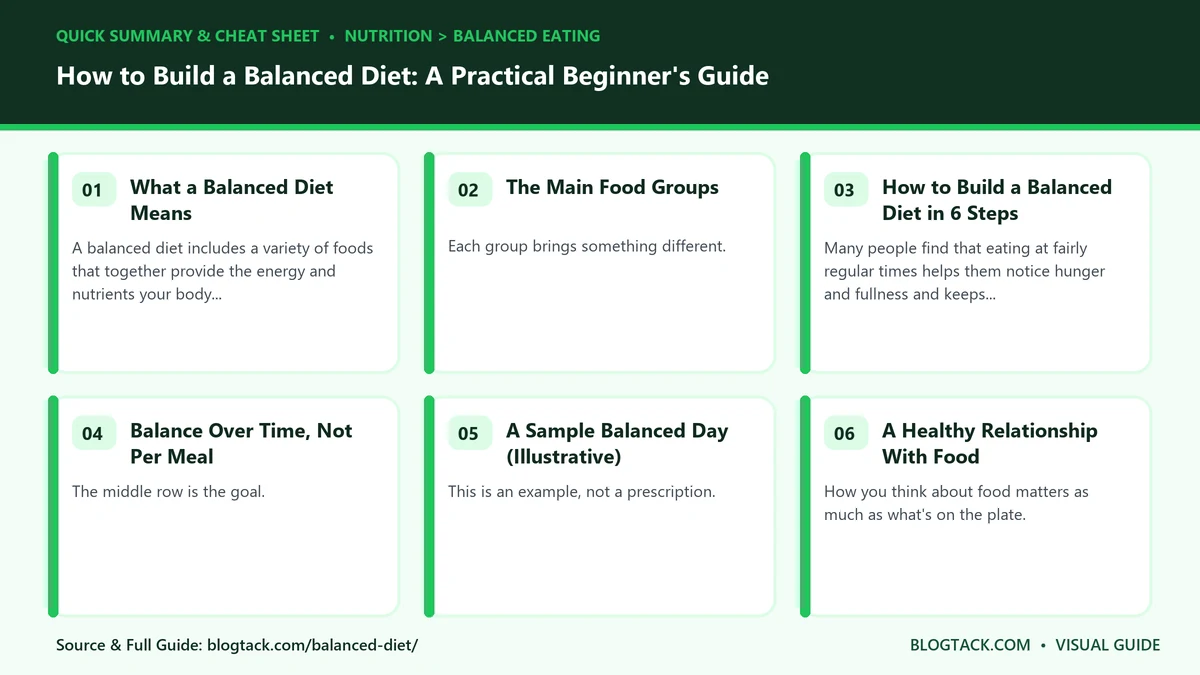
A balanced diet includes a variety of foods that together provide the energy and nutrients your body needs—whether you’re working a desk job or starting a home workout routine. No single food or meal makes or breaks it. What matters is your overall pattern over days and weeks.
The 2025–2030 Dietary Guidelines for Americans, released in January 2026, emphasize protein foods, healthy fats, fruits, vegetables and whole grains, while recommending limits on highly processed foods, added sugars and refined carbohydrates (AJMC summary). The full guidelines are available at DietaryGuidelines.gov.
Experts continue to debate some details of each new edition. For everyday cooking, the common ground is wide: plenty of whole and minimally processed foods, variety and enjoyment.
The Main Food Groups
| Food group | Examples | What it adds |
|---|---|---|
| Vegetables | Leafy greens, carrots, peppers, broccoli, beans | Fiber, vitamins, minerals |
| Fruits | Berries, apples, bananas, citrus | Fiber, vitamins, natural sweetness |
| Grains | Oats, brown rice, whole wheat bread, quinoa | Energy, fiber (especially whole grains) |
| Protein foods | Eggs, fish, poultry, meat, beans, lentils, tofu, nuts | Protein, iron, other nutrients |
| Dairy or alternatives | Milk, yogurt, cheese, fortified plant milks | Calcium, protein, vitamin D (if fortified) |
| Fats and oils | Olive oil, nuts, seeds, avocado | Essential fats, flavor, help absorbing some vitamins |
Each group brings something different. That’s why variety matters more than finding a “perfect” food. For more on the nutrients themselves, see what are macronutrients.
How to Build a Balanced Diet in 6 Steps
Step 1: Start With Regular Meals
Many people find that eating at fairly regular times helps them notice hunger and fullness and keeps energy steadier. There’s no single right schedule. Some people like three meals; others prefer smaller meals and snacks.
Step 2: Build Meals From Several Groups
A simple pattern: include a protein food, a vegetable or fruit, and a grain or other starchy food, plus some fat for flavor and satisfaction. Our guide to building a balanced plate shows how this looks on a plate, in a bowl or in a sandwich.
Step 3: Add Before You Remove
Instead of starting with what to cut, start with what to add: one more vegetable at dinner, fruit with breakfast, beans in a soup. Adding tends to feel more positive and often naturally shifts the balance of a meal. See how to eat more vegetables.
Step 4: Choose Whole and Minimally Processed Foods Often
Whole and minimally processed foods, like fresh or frozen vegetables, plain oats, eggs, beans and plain yogurt, form a strong base. Packaged foods can still fit; convenience matters in real life. Reading labels helps you compare options.
Step 5: Vary Your Choices
Rotate vegetables, fruits, grains and proteins through the week. Different colors and types bring different nutrients. Trying one new food a week is an easy way to widen variety.
Step 6: Keep It Flexible
Birthdays, busy weeks and meals out are part of life. A balanced diet has room for all foods. One meal doesn’t define your health.
Balance Over Time, Not Per Meal
| Mindset | What it looks like |
|---|---|
| Rigid | Every meal must be “perfect”; guilt after treats |
| Balanced | Most meals include a mix of food groups; treats are part of life |
| Overly loose | Rarely includes vegetables or fruits; mostly convenience foods |
The middle row is the goal. If one day is heavier on convenience foods, the next can include more vegetables. Balance happens across the week.
A Sample Balanced Day (Illustrative)
| Meal | Example |
|---|---|
| Breakfast | Oats with berries and a spoon of nut butter |
| Lunch | Whole grain wrap with chicken or beans, salad leaves and hummus |
| Snack | Yogurt with fruit, or an apple with cheese |
| Dinner | Salmon or tofu, roasted vegetables and rice |
| Drinks | Mostly water through the day |
This is an example, not a prescription. Your own day will look different depending on your appetite, culture, budget and schedule.
A Healthy Relationship With Food
How you think about food matters as much as what’s on the plate.
- No food is “good” or “bad.” Some foods are more nourishing than others, and all can fit.
- Eat without guilt. Enjoying food is part of a healthy life.
- Notice hunger and fullness. Eating when hungry and stopping when comfortably full helps many people.
- Skip extreme rules. Cutting out whole food groups without medical reason often backfires.
For common misconceptions, see common nutrition myths.
Individual Needs Vary
Age, activity, health conditions, pregnancy, culture, allergies and preferences all affect what a balanced diet looks like for you. The Dietary Guidelines include separate considerations for children, pregnant and lactating women, older adults and people following vegetarian or vegan diets. That’s why general guidance is a starting point, not a rulebook. A registered dietitian can help you tailor it.
Making It Work in Real Life
- Plan a few meals ahead. See how to meal plan for the week.
- Keep easy staples on hand: frozen vegetables, canned beans, eggs, oats, whole grain bread.
- Cook simple meals in batches to save time.
- Build habits slowly. See how to build healthy eating habits.
When to Seek Support
Talk to a doctor or registered dietitian if you have a health condition that affects eating, food allergies, digestive issues, or if you’re pregnant or planning a pregnancy.
If thoughts about food, eating or your body feel stressful, controlling or all-consuming, please reach out to a doctor or a specialist service. The National Alliance for Eating Disorders offers free support and resources (National Alliance for Eating Disorders).
Balanced Eating Fits Every Culture
Balanced eating isn’t one cuisine. Rice and dal with vegetables, a bean and corn tortilla dish, a fish and vegetable stew, noodle soups with greens and tofu: traditional meals around the world already combine several food groups. You don’t need to change what you love to eat. Small additions, like an extra vegetable side or a piece of fruit, can build on the meals you grew up with.
Balanced Eating for Families
Feeding a household adds its own challenges: different tastes, busy schedules, picky eaters. A few approaches help:
- Serve components separately so each person can build their plate.
- Offer new foods alongside familiar ones without pressure.
- Eat together when possible. Shared meals are a chance to enjoy food, not just fuel up.
- Involve children in simple tasks like washing vegetables or choosing a fruit at the store.
- Avoid labeling foods as good or bad in front of children.
Small Changes With Big Effects
If the steps above feel like a lot, start with one of these:
| Instead of… | Try… |
|---|---|
| Skipping breakfast on busy days | A banana and yogurt on the way out |
| A plain pasta dinner | Adding frozen peas or spinach to the sauce |
| Sugary drinks with meals | Water, sparkling water or milk most of the time |
| Only white bread | Mixing in whole grain bread some days |
Frequently Asked Questions
Do I need to count anything to eat a balanced diet?
No. Building meals from several food groups and paying attention to hunger and fullness works for most people.
Are supplements necessary?
Some people need them, for example during pregnancy or with certain diets or conditions. Ask a doctor or dietitian before starting supplements.
Is it okay to eat dessert?
Yes. Desserts and treats are part of a balanced, enjoyable way of eating.
What if I don’t like vegetables?
Start with ones you tolerate, try different cooking methods and add them to dishes you already enjoy.
Do I need to buy organic or special foods?
No. Everyday foods like frozen vegetables, beans, eggs and oats support balanced eating.
Is it okay to eat the same meals often?
Yes. Repeating meals you enjoy is practical. Try rotating vegetables or fruits within them for variety.
Do I need to eat breakfast?
Not necessarily. Some people feel better with breakfast, others don’t. Notice what works for your energy and appetite.
Can a balanced diet include convenience foods?
Yes. Frozen meals, canned soups and ready-made salads can all fit, especially with an added vegetable or fruit.
The Bottom Line
How to build a balanced diet comes down to regular meals built from several food groups, adding nourishing foods before cutting others, choosing whole and minimally processed foods often, varying your choices and keeping flexibility and enjoyment at the center. Needs differ, so use this as a starting point and seek personal advice when you need it.
This article is for general informational and educational purposes only and is not medical, nutritional, or dietary advice. Individual nutritional needs vary. Consult a doctor or registered dietitian for personalized guidance, especially if you have any health conditions or specific dietary needs.