
When you start exercising, it’s tempting to think more is always better. Train every day, push every session, never skip. But fitness isn’t built during the workout itself. It’s built afterward, while your body repairs and adapts. Skip that part and progress stalls.
This guide explains the importance of rest and recovery in fitness, what recovery involves, how to plan it and how to tell when you need more.
What Happens Between Workouts
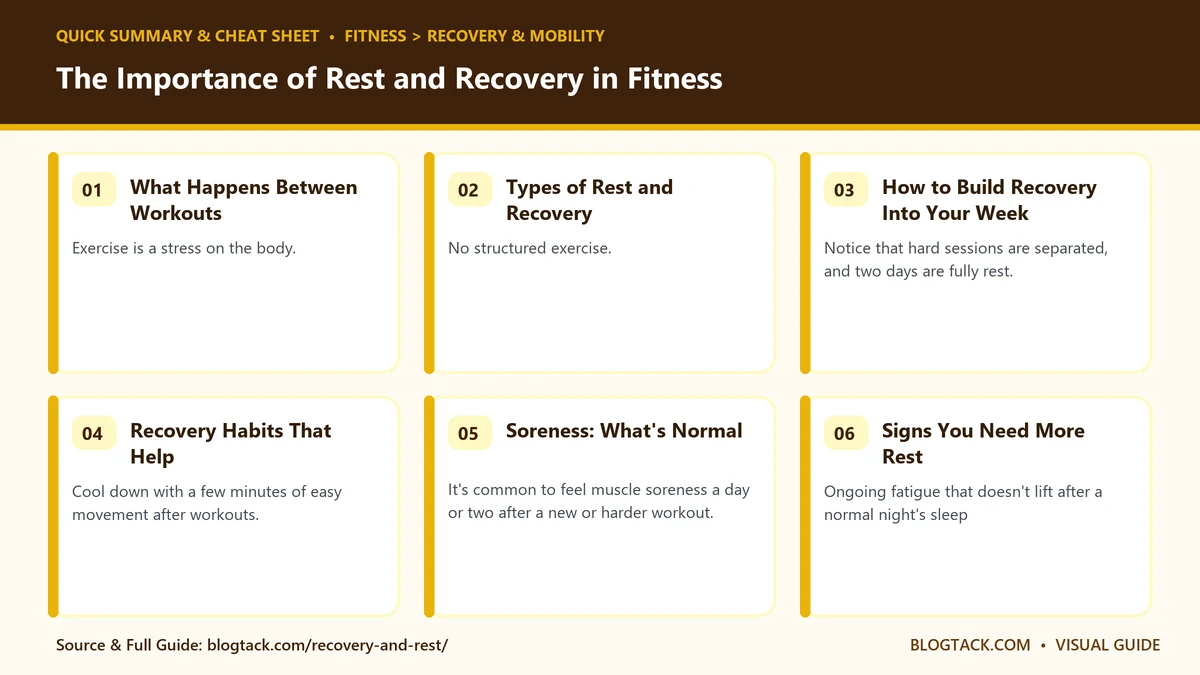
Exercise is a stress on the body. Strength work creates small amounts of muscle strain; cardio challenges your heart, lungs and energy systems. During recovery, backed by quality sleep and mental wellness and balanced macronutrients, the body repairs and adapts so the same challenge feels easier next time.
If the next hard session comes before recovery is complete, the stress piles up instead. Over time that can show up as stalled progress, lingering fatigue, poor sleep, irritability or a higher risk of injury.
The Importance of Rest and Recovery in Fitness, in Short
| Without enough recovery | With enough recovery |
|---|---|
| Workouts feel harder over time | Workouts feel easier, or you can do more |
| Soreness lingers | Soreness fades in a day or two |
| Sleep and mood suffer | Energy and mood stay steady |
| Higher chance of overuse injuries | Joints and tissues have time to adapt |
| Motivation drops | Exercise feels sustainable |
Types of Rest and Recovery
Full Rest Days
No structured exercise. Normal daily activity like walking around, light chores, playing with kids is fine. Most beginners benefit from at least one or two full rest days a week.
Active Recovery
Light, easy movement that doesn’t add much stress: a relaxed walk, easy cycling, easy swimming or a mobility routine. It can help you feel less stiff. Keep it easy. If it leaves you tired, it wasn’t recovery.
Rest Between Sets and Exercises
Short rests inside a workout let you keep good form. For beginner strength training, 60 to 90 seconds between sets is a common range.
Rest Between Sessions for the Same Muscles
Avoid hard strength work for the same muscle groups on back-to-back days. A full-body routine on Monday, Wednesday and Friday, or Monday and Thursday, gives each muscle group time to recover. See weekly workout splits for beginners.
Sleep
Sleep is one of the most important recovery tools. A CDC report notes that sleep medicine experts recommend at least 7 hours a night for adults aged 18 to 60 (CDC). Regular sleep and wake times, a dark and cool room, and less screen time before bed can help.
Deload or Easier Weeks
Every four to eight weeks, some people plan an easier week with less volume or intensity. It gives your body a chance to catch up and can help you return feeling fresher. It’s optional for beginners but useful if you feel run down.
How to Build Recovery Into Your Week
| Day | Example (3 training days) |
|---|---|
| Monday | Full-body strength |
| Tuesday | Active recovery: easy walk |
| Wednesday | Cardio |
| Thursday | Full rest |
| Friday | Full-body strength |
| Saturday | Light cardio or mobility |
| Sunday | Full rest |
Notice that hard sessions are separated, and two days are fully rest.
Recovery Habits That Help
- Cool down with a few minutes of easy movement after workouts.
- Light stretching or mobility after training or on light days. See stretching routines beginners skip.
- Hydrate around your workouts.
- Eat regular, balanced meals. Your body needs fuel to repair. Talk to a doctor or registered dietitian for personal nutrition guidance.
- Manage stress. Work and life stress affect recovery too.
Soreness: What’s Normal
It’s common to feel muscle soreness a day or two after a new or harder workout. It usually fades within a few days and eases with gentle movement. Sharp pain, joint pain, swelling or soreness that gets worse instead of better isn’t typical and needs attention. See muscle soreness after a workout.
Signs You Need More Rest
- Ongoing fatigue that doesn’t lift after a normal night’s sleep
- Performance dropping across several sessions
- Soreness that lingers much longer than usual
- Trouble sleeping, irritability or low mood
- Getting ill more often
- Dreading workouts you used to enjoy
If several of these show up together, take extra rest days or an easier week. Our list of signs you need a rest day goes into more detail.
Balancing Rest With Consistency
Rest isn’t the same as quitting. The aim is a rhythm you can keep: regular sessions with recovery built in. A useful rule is “never miss twice.” If you skip a planned session, try to make the next one, even if it’s shorter.
Rest and a Healthy Relationship With Exercise
Exercise should add to your life, not take it over. Feeling guilty on rest days, training through pain or illness, or feeling anxious when you can’t work out can be signs that the relationship has tipped too far. If that sounds familiar, consider talking to a doctor or mental health professional. Rest is a normal, healthy part of training.
Recovery Myths
| Myth | Reality |
|---|---|
| “Rest days mean losing progress.” | Progress happens during recovery. |
| “No soreness means a bad workout.” | Soreness isn’t a reliable sign of a good session. |
| “You should push through every pain.” | Sharp or joint pain is a signal to stop. |
| “More training is always better.” | Too much, too soon is a common reason beginners stall or get hurt. See beginner fitness mistakes. |
A Simple Weekly Recovery Check
Once a week, rate each of these from 1 (poor) to 5 (great):
| Area | Score (1 to 5) |
|---|---|
| Sleep quality | |
| Energy during the day | |
| Muscle soreness (5 = none) | |
| Mood and motivation | |
| How workouts felt |
If your total drops noticeably for two weeks running, take an easier week. If it stays steady or improves, your balance of training and rest is working.
Rest Looks Different for Everyone
Age, sleep, work stress, health conditions and how long you’ve been training all affect how much recovery you need. Someone with a physically demanding job may need more rest days than someone who sits at a desk. Treat any plan as a starting point and adjust to how your body responds.
Recovery After Cardio vs. Strength
| After strength sessions | After cardio sessions | |
|---|---|---|
| What needs recovery | Worked muscle groups, joints | Heart, lungs, legs and energy levels |
| Typical spacing | A day or more before training the same muscles hard again | Easy cardio can be done most days; space out hard sessions |
| Useful on the next day | Light walking, mobility | Easy movement, strength work for other areas |
Light activity on recovery days fits the CDC’s view that adults can spread their activity across the week in smaller chunks (CDC). It doesn’t all have to be hard to count.
When Rest Isn’t Enough
Rest helps with normal training fatigue. It isn’t a fix for everything. See a doctor if you have pain that doesn’t improve with rest, swelling around a joint, numbness or tingling, chest pain, dizziness, or fatigue that lasts for weeks even when you cut back on exercise. These can point to issues that need medical attention.
Frequently Asked Questions
How many rest days does a beginner need?
Usually at least one or two full rest days a week, plus no hard strength training for the same muscles on back-to-back days.
Is walking on a rest day OK?
Yes. Easy walking is a good form of active recovery.
Should I rest if I’m sore?
Mild soreness often feels better with light movement. Rest more if soreness is severe or comes with sharp pain.
Can I do strength training two days in a row?
Yes, if you work different muscle groups each day or keep one day light. Many beginners do best with full-body sessions on non-consecutive days. See strength training at home.
Do I need a recovery day after a light workout?
Not necessarily. Easy sessions like walking or mobility work can be done on consecutive days. Recovery matters most after hard or new sessions.
Can stretching replace a rest day?
Light stretching can be part of a rest day. It’s not a substitute for sleep or for spacing out hard sessions.
Will I lose fitness if I rest for a week?
A week of rest won’t undo months of training. Many people come back feeling stronger. Longer breaks may mean easing back in at a lower level for a few sessions.
Are naps helpful for recovery?
Short naps can help if you slept poorly, but they don’t replace regular nighttime sleep. Keep them early in the day so they don’t disrupt your night.
The Bottom Line
The importance of rest and recovery in fitness comes down to this: your body gets stronger between workouts, not during them. Build in rest days, separate hard sessions, prioritize sleep and watch for signs of fatigue. Recovery done well makes it easier to stay consistent for the long run.
This article is for general informational and educational purposes only and is not medical or professional fitness advice. Exercise carries inherent risks. Consult a doctor or qualified health professional before starting any new exercise program, especially if you have any health conditions, injuries, or concerns.

