Healthy food is often marketed as expensive: superfoods, specialty powders, premium labels. But many of the most nourishing foods are also some of the cheapest. Beans, lentils, oats, eggs, frozen vegetables and seasonal produce form the base of balanced eating in many households around the world.
This guide covers healthy eating on a budget: planning, shopping, cooking and cutting waste. For a list of specific foods to stock up on, see budget-friendly healthy foods.
Healthy Eating Doesn’t Have to Be Expensive
Costs add up most from impulse buys, food waste, frequent takeout and highly packaged convenience items. A few habits can make a big difference:
| Cost driver | Budget-friendly alternative |
|---|---|
| Shopping without a plan | Weekly meal plan and list |
| Takeout on busy nights | A few quick “emergency meals” at home |
| Throwing away spoiled produce | Buying frozen, using leftovers, planning around what you have |
| Single-serve packaged snacks | Buying larger packs and portioning at home |
| Specialty “health” products | Everyday staples |
MyPlate offers guidance on eating healthily on a budget, including planning, smart shopping and preparing food at home (MyPlate).
Step 1: Plan Before You Shop
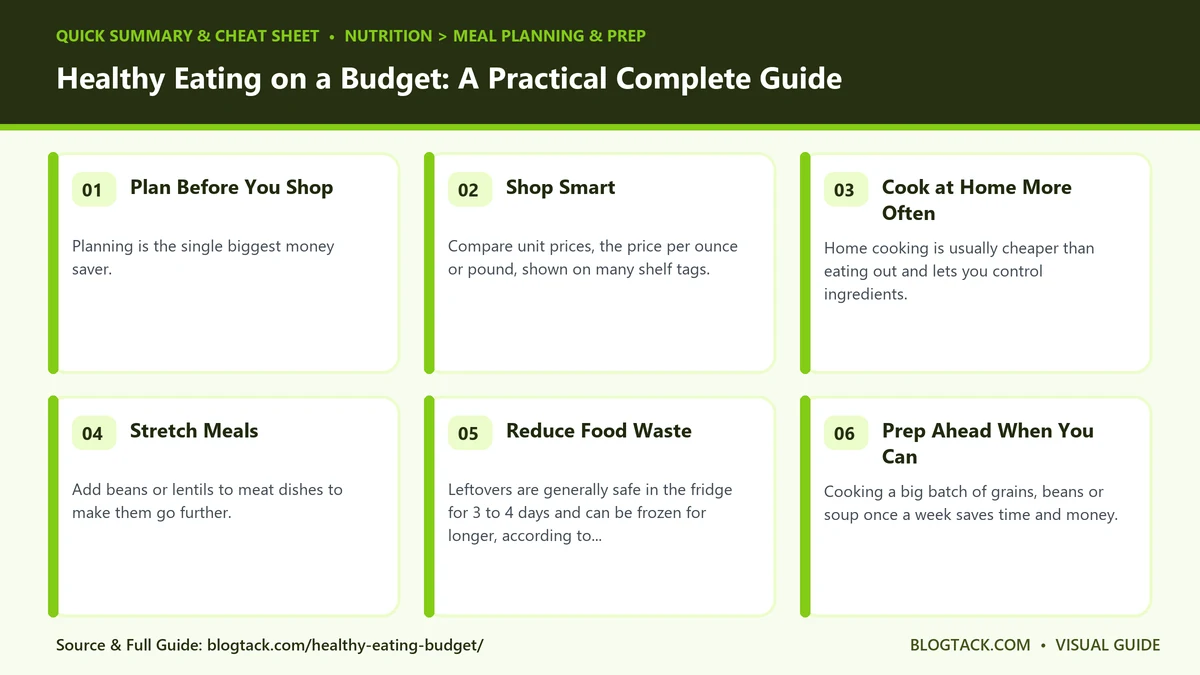
Planning is the single biggest money saver.
- Check what you already have.
- Plan meals for the week, especially dinners. See how to meal plan for the week.
- Build meals around lower-cost proteins like beans, lentils, eggs and canned fish.
- Plan for leftovers to cover lunches.
- Write a list and stick to it. See how to build a healthy grocery list.
Step 2: Build Around Affordable Staples
| Category | Budget-friendly options |
|---|---|
| Proteins | Dried or canned beans, lentils, eggs, canned tuna or salmon, peanut butter, chicken thighs, tofu |
| Grains | Oats, rice, whole wheat pasta, whole grain bread, barley |
| Vegetables | Carrots, cabbage, onions, potatoes, frozen mixed vegetables, canned tomatoes |
| Fruits | Bananas, apples, oranges, frozen berries, seasonal fruit |
| Dairy and alternatives | Plain yogurt in large tubs, milk, block cheese |
| Fats and flavor | Vegetable or olive oil, spices, garlic, stock cubes |
Step 3: Shop Smart
- Compare unit prices, the price per ounce or pound, shown on many shelf tags.
- Buy store brands, which are often similar to name brands.
- Choose frozen and canned produce. They’re picked and packed at peak ripeness and last much longer. Look for canned vegetables with low or no added salt and fruit packed in juice or water.
- Buy in-season produce, which is often cheaper and tastier.
- Buy whole and prep yourself: a block of cheese, a whole cabbage or a bag of carrots usually costs less than pre-cut versions.
- Buy in bulk only for items you’ll use before they spoil.
- Shop when you’re not hungry to avoid impulse buys.
Step 4: Cook at Home More Often
Home cooking is usually cheaper than eating out and lets you control ingredients. It doesn’t have to be complicated. See how to cook healthy meals for beginners.
Low-cost meal ideas:
- Lentil and vegetable soup with bread
- Bean chili with rice
- Egg fried rice with frozen vegetables
- Pasta with tomato sauce, canned tuna and spinach
- Baked potatoes with beans and cheese
- Oats with banana and peanut butter
Step 5: Stretch Meals
- Add beans or lentils to meat dishes to make them go further.
- Bulk out soups and stews with vegetables and grains.
- Use the same base ingredient in several meals (for example, roast a chicken, then use leftovers in wraps and soup).
- Make broth from vegetable scraps or bones.
Step 6: Reduce Food Waste
| Tip | How it helps |
|---|---|
| “First in, first out” in the fridge | Older items get used first |
| Freeze bread, bananas and leftovers | Prevents spoilage |
| Plan a “use it up” meal each week | Clears odds and ends |
| Store produce properly | Lasts longer |
| Understand date labels | “Best by” dates are about quality, not usually safety |
Leftovers are generally safe in the fridge for 3 to 4 days and can be frozen for longer, according to USDA food safety guidance (USDA FSIS).
Step 7: Prep Ahead When You Can
Cooking a big batch of grains, beans or soup once a week saves time and money. See how to meal prep for a busy work week.
A Sample Budget-Friendly Week (Illustrative)
| Day | Dinner |
|---|---|
| Monday | Lentil soup with bread |
| Tuesday | Leftover lentil soup; side salad |
| Wednesday | Egg fried rice with frozen peas and carrots |
| Thursday | Bean chili with rice |
| Friday | Leftover chili in baked potatoes |
| Saturday | Pasta with tomato sauce, canned tuna or chickpeas and spinach |
| Sunday | Sheet-pan chicken thighs or tofu with potatoes and carrots |
Notice how leftovers and shared ingredients keep costs down.
Making Vegetables Affordable
Frozen vegetables, cabbage, carrots, onions and canned tomatoes are among the most affordable ways to add vegetables. See how to eat more vegetables.
Food Assistance and Community Resources
If money is very tight, you’re not alone, and help is available. In the U.S., programs like SNAP (Supplemental Nutrition Assistance Program) and WIC (for pregnant people, new parents and young children) help families buy food. Local food banks and community pantries can also help. Your local social services office or 211 can point you to options.
Keep Healthy Eating on a Budget Realistic
Healthy eating on a budget doesn’t mean everything has to be homemade or perfect. Canned soup with added frozen vegetables, a frozen meal with a side salad, or sandwiches for dinner all count. Do what works for your time, energy and money.
Individual Needs and Circumstances Vary
Food budgets, cooking equipment, time, culture, health conditions and access to stores differ greatly. Use the ideas that fit your situation. If you have specific dietary needs, a registered dietitian can help you plan affordably.
Budget Tips by Store Type
| Store type | Tips |
|---|---|
| Large supermarket | Compare unit prices; check top and bottom shelves for cheaper brands |
| Discount grocer | Great for staples; check produce quality |
| Farmers’ market | Shop near closing time for deals; buy what’s in season |
| Warehouse store | Buy bulk only for items you’ll use; split with friends |
| Ethnic or international grocers | Often good prices on spices, rice, beans and produce |
| Online grocery | Helps avoid impulse buys; watch delivery fees |
Kitchen Basics on a Budget
You don’t need fancy equipment. A good knife, a cutting board, a large pot, a frying pan, a baking sheet and some storage containers cover most budget-friendly meals. A slow cooker or rice cooker can be a helpful addition if you find one at a good price.
Cooking From the Pantry
When money is tight before payday, a well-stocked pantry helps. Some combinations made from shelf-stable items:
- Rice, canned beans, canned tomatoes and spices
- Pasta, canned tuna or chickpeas, garlic and oil
- Oats, peanut butter and a banana
- Lentil soup from dried lentils, onion, carrot and stock
Keeping a few of these ingredients on hand means you always have a meal option.
Growing a Little of Your Own
If you have a sunny windowsill, balcony or small garden, herbs like basil, parsley and chives are easy to grow and save money over time. Lettuce, tomatoes and green onions can also grow in pots. Even a small amount of homegrown food can make meals fresher and cheaper, and it’s a fun project to share with children.
Frequently Asked Questions
Are frozen vegetables as nutritious as fresh?
Frozen vegetables can be just as nutritious, since they’re usually frozen soon after harvest. They also reduce waste.
Is organic food necessary for healthy eating?
No. Conventional fruits and vegetables are a nourishing choice.
How can I eat healthily without much time?
Use quick meals, batch cooking and convenient staples like frozen vegetables and canned beans.
Are canned foods healthy?
Many are. Choose lower-sodium options and rinse canned beans to reduce salt.
How can I avoid wasting fresh herbs?
Chop leftover herbs and freeze them in a little oil in an ice cube tray, or choose dried herbs for everyday cooking.
Is buying in bulk always cheaper?
Usually per unit, but only if you’ll use it all before it spoils. Compare unit prices and be realistic about storage.
What are the cheapest protein foods?
Dried beans and lentils are among the most affordable, followed by eggs, canned fish, peanut butter and some cuts of chicken.
Can I eat healthily using only a microwave?
Yes. Microwave-steamed vegetables, baked potatoes, scrambled eggs and oats are all simple, affordable options.
How do I avoid spending too much on snacks?
Buy larger packs of plain nuts, popcorn kernels or yogurt and portion them at home.
Do coupons help?
They can, for items you already buy. Avoid buying things just because they’re discounted.
The Bottom Line
Healthy eating on a budget is very possible: plan meals, build around affordable staples, shop smart, cook at home more often, stretch meals and reduce waste. Frozen and canned foods are your allies. Use community resources if you need them, and remember that balanced eating doesn’t need to be expensive or perfect.
This article is for general informational and educational purposes only and is not medical, nutritional, or dietary advice. Individual nutritional needs vary. Consult a doctor or registered dietitian for personalized guidance, especially if you have any health conditions or specific dietary needs.