Walking into a grocery store without a list is a reliable way to spend more and come home without what you need for dinner. A good list keeps shopping quick, keeps your budget in check and makes balanced meals easier all week.
This guide explains how to build a healthy grocery list step by step, with a template you can copy. If you haven’t planned your meals yet, start with how to meal plan for the week.
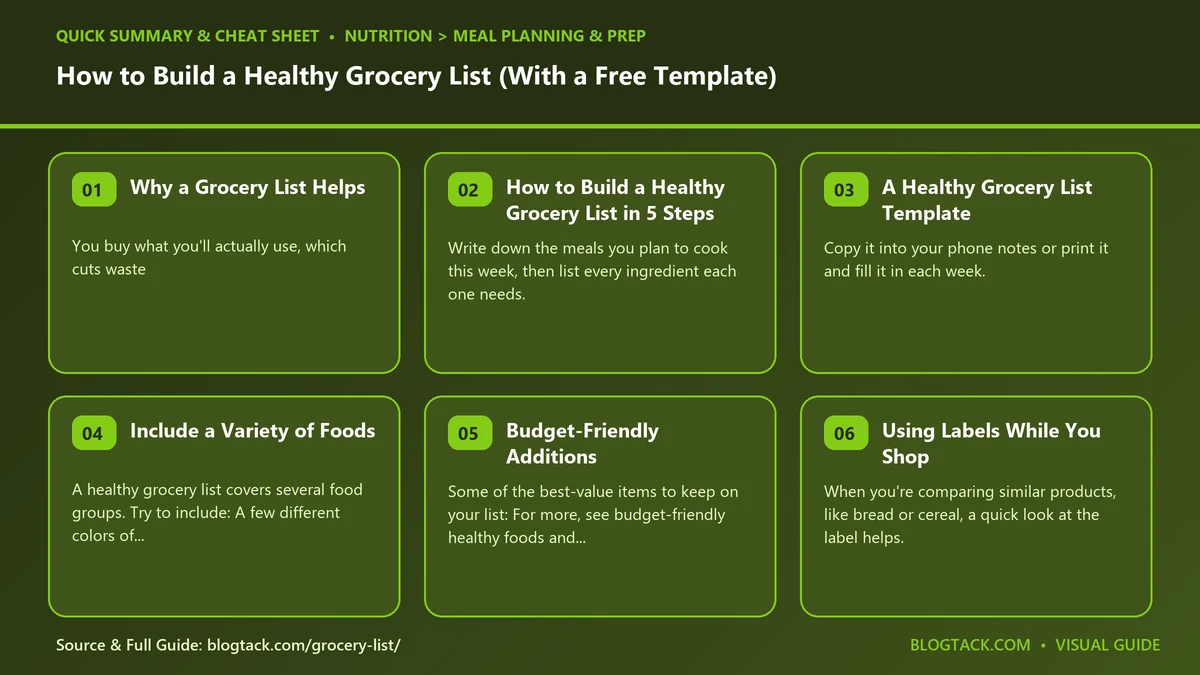
Why a Grocery List Helps
- You buy what you’ll actually use, which cuts waste
- You’re less likely to make impulse purchases
- Meals come together more easily because ingredients are on hand
- Shopping takes less time
MyPlate recommends making a grocery list and checking what you already have as part of eating well on a budget (MyPlate).
How to Build a Healthy Grocery List in 5 Steps
Step 1: Start From Your Meal Plan
Write down the meals you plan to cook this week, then list every ingredient each one needs. Include breakfasts, lunches and snacks if you plan those too.
Step 2: Check What You Already Have
Look in the fridge, freezer and pantry. Cross off anything you already have and note items that need using up soon.
Step 3: Add Your Staples
Keep a standing list of basics you buy most weeks, so you don’t forget them:
- Eggs, milk or plant milk, plain yogurt
- Bread or wraps
- Oats, rice or pasta
- Onions, garlic, carrots
- Bananas, apples or seasonal fruit
- Frozen vegetables
- Canned beans and tomatoes
Step 4: Organize by Store Section
Grouping items the way the store is laid out saves time and avoids backtracking.
Step 5: Leave Room for Flexibility
Write “seasonal vegetable” or “fruit on offer” instead of something specific when you’re happy to swap. This lets you take advantage of deals.
A Healthy Grocery List Template
| Section | Items |
|---|---|
| Vegetables | Leafy greens, carrots, onions, peppers, broccoli, tomatoes, seasonal choice |
| Fruits | Bananas, apples, berries (fresh or frozen), citrus, seasonal choice |
| Proteins | Eggs, chicken, fish, tofu, canned beans, lentils, canned tuna or salmon |
| Grains | Oats, brown rice, whole wheat pasta, whole grain bread, wraps |
| Dairy and alternatives | Milk or fortified plant milk, plain yogurt, cheese |
| Frozen | Mixed vegetables, spinach, berries, a backup frozen meal |
| Pantry | Canned tomatoes, olive or vegetable oil, nuts or nut butter, spices, stock |
| Snacks | Popcorn kernels, crackers, hummus, fruit |
| Household extras | Containers, foil, anything else you need |
Copy it into your phone notes or print it and fill it in each week.
Include a Variety of Foods
A healthy grocery list covers several food groups. Try to include:
- A few different colors of vegetables and fruits
- More than one protein source across the week, including plant proteins
- At least one whole grain
- Dairy or a fortified alternative
- Some healthy fats like nuts, seeds or olive oil
For easy ways to fit in more produce, see how to eat more vegetables.
Budget-Friendly Additions
Some of the best-value items to keep on your list:
| Item | Why it’s useful |
|---|---|
| Dried or canned beans and lentils | Affordable protein and fiber |
| Oats | Cheap, filling breakfast base |
| Frozen vegetables and fruit | Last for months, little waste |
| Eggs | Versatile, quick protein |
| Carrots, cabbage, onions | Long-lasting, low-cost vegetables |
| Canned fish | Shelf-stable protein |
For more, see budget-friendly healthy foods and healthy eating on a budget.
Using Labels While You Shop
When you’re comparing similar products, like bread or cereal, a quick look at the label helps. The FDA’s general guide is that 5% Daily Value or less of a nutrient per serving is low and 20% or more is high (FDA). Once you find options you like, add the specific product to your list. See how to read nutrition labels.
Stay Flexible
Your list is a guide. If the store is out of something, swap it for a similar item. If a fruit or vegetable is on offer, buy it and adjust a meal. A list that bends is easier to keep using.
Tips for Shopping With Your List
- Eat before you shop to avoid impulse buys.
- Shop the outer aisles first for produce, dairy and proteins, then the inner aisles for staples.
- Use the store’s app or online shopping if it helps you stick to the list.
- Keep a running list on the fridge or phone and add items as they run out.
Keep a Healthy Perspective
There’s no need to buy only “perfect” foods. Treats, snacks and convenience items can be on your list too. Balanced eating has room for everything.
Frequently Asked Questions
Should I make a new list every week?
Yes, based on your meal plan, but reuse a staples list so it only takes a few minutes.
Is it okay to buy frozen vegetables instead of fresh?
Yes. Frozen vegetables are nutritious, affordable and reduce waste.
What if my household has different preferences?
Include flexible ingredients that can be used in several ways, like wraps, rice, beans and vegetables, so everyone can build meals they like.
Do I need to buy organic?
No. Conventional produce is a nourishing choice.
The Bottom Line
How to build a healthy grocery list: start from your meal plan, check what you have, add staples, organize by store section and leave room to swap. Include a variety of food groups and budget-friendly basics, and keep the list flexible. A good list makes the whole week of eating easier.
This article is for general informational and educational purposes only and is not medical, nutritional, or dietary advice. Individual nutritional needs vary. Consult a doctor or registered dietitian for personalized guidance, especially if you have any health conditions or specific dietary needs.