Many people picture mindfulness as sitting cross-legged in silence for an hour. That’s one way to practice, but it’s far from the only one. You can practice for a minute while the kettle boils, during your commute or while washing dishes.
This guide covers simple mindfulness practices that fit into a busy day, what mindfulness is and isn’t, and how to start without pressure.
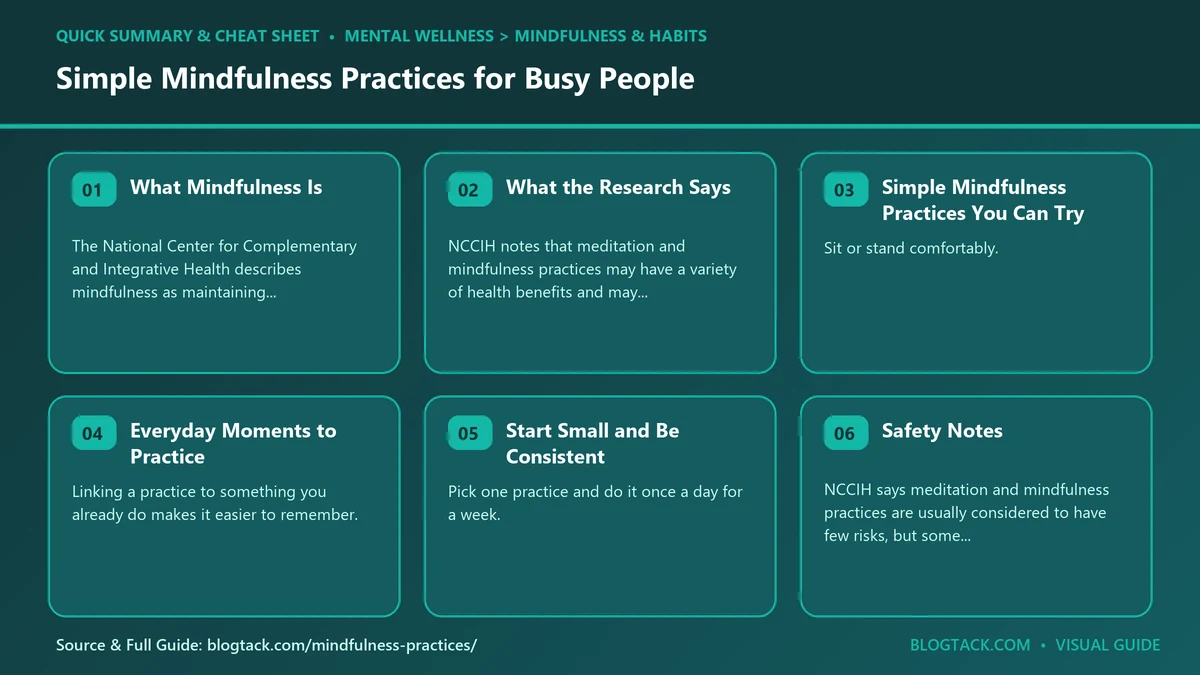
What Mindfulness Is
The National Center for Complementary and Integrative Health describes mindfulness as maintaining attention or awareness on the present moment without making judgments (NCCIH). In everyday terms, it means noticing what’s happening right now, in your body, your thoughts and your surroundings, and letting it be as it is for a moment.
It’s not about emptying your mind or feeling calm all the time. Thoughts will wander. Noticing that they’ve wandered and coming back is the practice.
What the Research Says
NCCIH notes that meditation and mindfulness practices may have a variety of health benefits and may help some people improve their quality of life, and that mindfulness meditation may help reduce insomnia and improve sleep quality. It also notes that much research has been preliminary, so results should be interpreted carefully (NCCIH).
Simple Mindfulness Practices You Can Try Today
1. One-Minute Breath
Sit or stand comfortably. For one minute, notice your breath moving in and out. When your mind wanders, gently bring it back. That’s it. For more breathing ideas, see breathing techniques for stress.
2. Five Senses Check
Pause and notice: something you can see, hear, feel, smell and taste. It takes about 30 seconds and brings you into the present.
3. First Sip Pause
With your first sip of coffee or tea, notice the warmth, the smell and the taste before you reach for your phone.
4. Body Scan in Three Breaths
Breathe in and notice your head and shoulders. Breathe in again and notice your chest and stomach. Once more for your legs and feet. Let any tension soften if it can.
5. Walking Attention
On a short walk, notice each step: your feet touching the ground, the air on your skin, the sounds around you.
6. Pause Before Responding
Before replying to a stressful message, take one breath and notice how you feel. It creates a small space between reaction and response.
Everyday Moments to Practice
| Moment | Practice |
|---|---|
| Waking up | Three breaths before checking your phone |
| Waiting in line | Notice your feet on the floor |
| Washing hands or dishes | Feel the water temperature and texture |
| Commuting (as a passenger) | Look out the window and name what you see |
| Before a meeting | One-minute breath |
| Getting into bed | Body scan in three breaths |
Linking a practice to something you already do makes it easier to remember. See how to build better mental habits and a morning routine for mental wellness.
Common Myths
| Myth | Reality |
|---|---|
| “I need to clear my mind.” | Thoughts are normal; you just notice them. |
| “I need 20 minutes or more.” | Even one minute can be a practice. |
| “I’m bad at it because my mind wanders.” | Noticing the wandering is the practice. |
| “It should make me feel calm every time.” | Some sessions feel restless. That’s fine. |
Start Small and Be Consistent
Pick one practice and do it once a day for a week. Then notice how it feels. If you’d like more, add a second moment or try a short guided recording.
Safety Notes
NCCIH says meditation and mindfulness practices are usually considered to have few risks, but some people do have negative experiences, such as increased anxiety (NCCIH). If a practice makes you feel worse, stop, open your eyes, focus on something neutral in the room and try a different approach later. If you have a history of trauma or a mental health condition, consider exploring mindfulness with guidance from a qualified professional.
Mindfulness and Anxiety
Some people find mindfulness helps them notice anxious thoughts without getting swept away. It isn’t a treatment for anxiety disorders. See how to manage everyday anxiety for other tools and guidance on when to seek help.
Mindfulness and Sleep
A short body scan or breath practice at bedtime can help some people wind down. See sleep and mental wellness.
Formal vs. Informal Practice
| Formal practice | Informal practice | |
|---|---|---|
| What it is | Setting aside time to sit, breathe or follow a guided recording | Bringing attention to ordinary activities |
| Example | 10 minutes of breath awareness each morning | Noticing the taste of your tea |
| Good for | Building focus and a regular habit | Fitting practice into a full day |
Both count. Many busy people start with informal moments and add short formal sessions later.
Frequently Asked Questions
How long should I practice?
Start with one to five minutes. Consistency matters more than length.
Do I need an app?
No, though guided recordings can help some beginners.
Is mindfulness religious?
Mindfulness has roots in Buddhist traditions, but many modern practices are secular.
What if I fall asleep?
That’s common, especially at night. It may be a sign you need more rest.
The Bottom Line
Simple mindfulness practices can fit into even the busiest day: a one-minute breath, a five senses check, a slow first sip or a pause before responding. Start with one, attach it to a daily moment and be patient with a wandering mind. If a practice feels uncomfortable, stop and try something else.
This article is for general informational and educational purposes only and is not medical advice, therapy, or a substitute for professional mental health care. If you are struggling with your mental health, please reach out to a qualified mental health professional. If you are in crisis, contact a local crisis line or emergency services.